
Lessons from the Wren Library
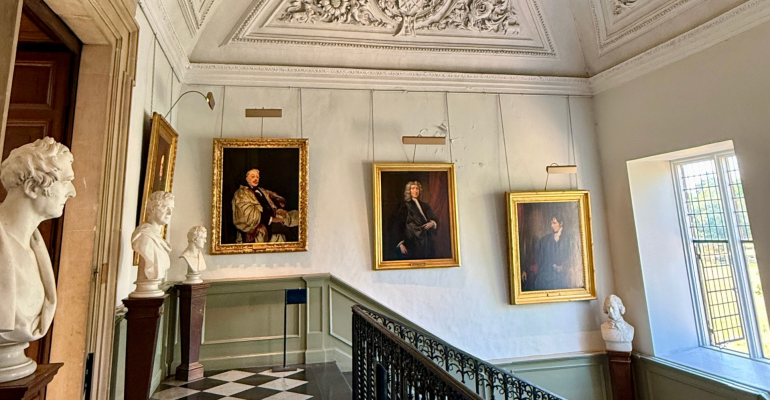
 Gina
Gina Visiting Trinity College and the Wren Library in Cambridge was an extraordinary privilege. Designed by Sir Christopher Wren, the library is itself a monument to learning, a luminous, elegant space where architectural grandeur frames centuries of scholarship.
For me, as a Newton scholar, its greatest significance lay in the opportunity to consult materials connected with Isaac Newton in the place most intimately tied to his intellectual formation and legacy.
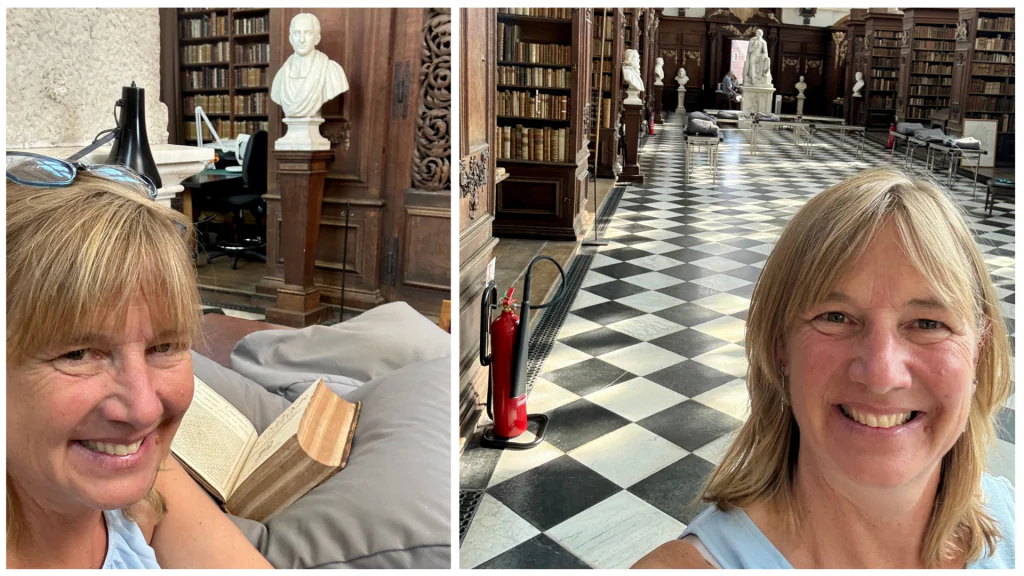
To encounter Trinity’s Newton collections directly was deeply moving. Manuscripts, papers, and archival holdings revealed not just historical facts, but the living texture of Newton’s thought: his annotations, his calculations, his theological explorations, his relentless pursuit of natural philosophy. Printed editions can preserve ideas, but they cannot fully convey the immediacy of a mind at work.
Sitting in the Wren Library, surrounded by the institutional and material traces of Newton’s world, I felt both humbled and inspired. It was a reminder of the immense privilege of archival scholarship, the chance to touch the sources of inquiry, to see the questions as they were first wrestled with, and to feel the continuity of human curiosity across centuries.
It left me reflecting:
- Where do you find connection to the deeper legacy behind your own pursuits?
- How might engaging with the “original sources” in your life, whether mentors, traditions, or personal experiences shift the way you see your work today?
- What would change if you treated learning not as accumulation, but as intimacy with inquiry?
Reveal greatness,
gina 🙂

