
Lessons from Hadrian’s Wall
 Gina
Gina Hadrian’s Wall is one of the most remarkable surviving monuments of Roman Britain. Construction began around AD 122 under Emperor Hadrian, stretching about 73 miles from the River Tyne near Newcastle to the Solway Firth west of Carlisle.
It was not simply a defensive barrier. A network of forts, milecastles, watchtowers, roads, and settlements created a carefully controlled frontier. The Wall regulated travel and trade, collected customs duties, and enabled the army to monitor movement between Roman Britain and the peoples to the north.
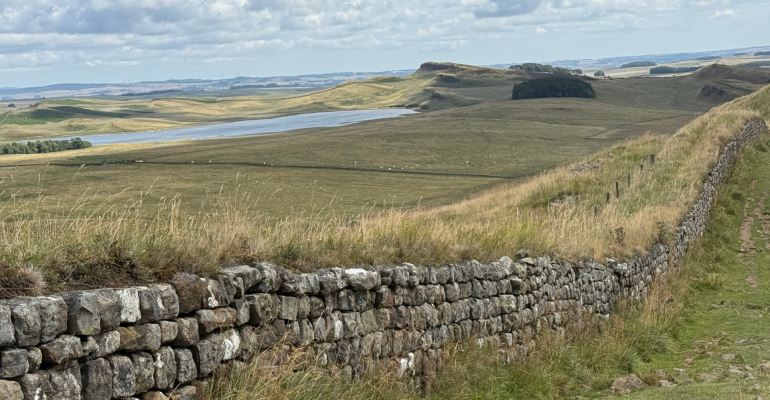
Hiking near Carlisle made its scale especially vivid. The Wall seemed to stretch endlessly across the countryside, following the contours of hills and ridges with extraordinary confidence. In several places, the surviving stonework is remarkably intact, and parts of its line remain strikingly level despite being nearly two thousand years old.
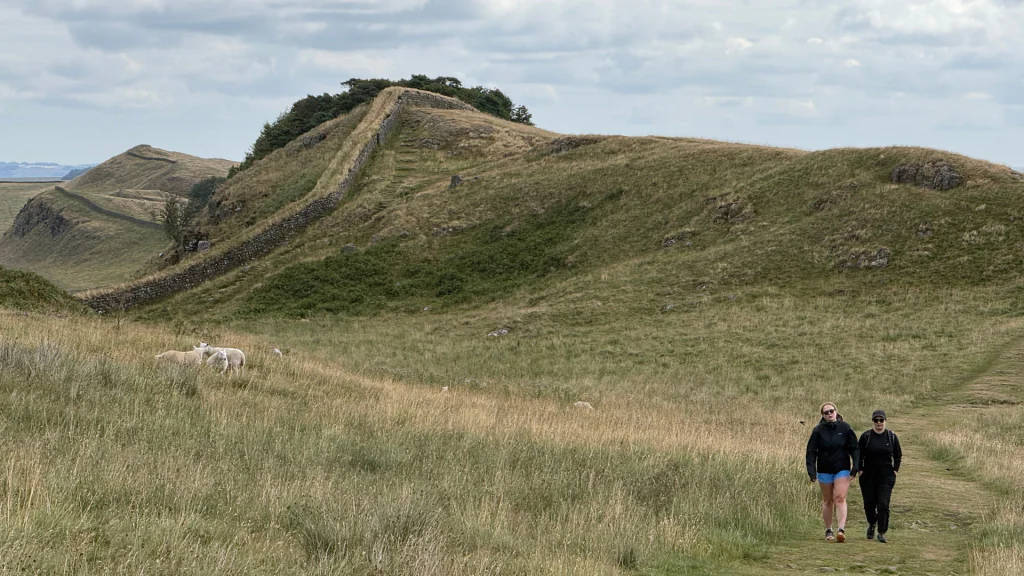
The open landscape added to the experience: wide skies, wind‑swept fields, and distant views suggested both the ambition of Roman engineering and the isolation of the soldiers who once served on this frontier.
It left me reflecting on the meaning of boundaries. They are not only about defense, they are about definition. They mark where responsibility begins, where courage is tested, and where vision meets reality.
As I think about Hadrian’s Wall, I wonder:
- What boundaries in your life are shaping your frontier right now?
- How do you balance the need for protection with the desire for expansion?
- And how might you walk your own walls with confidence, clarity, and resilience?
Reveal greatness,
gina 🙂

