
Newton & The Speed of Sound
 Gina
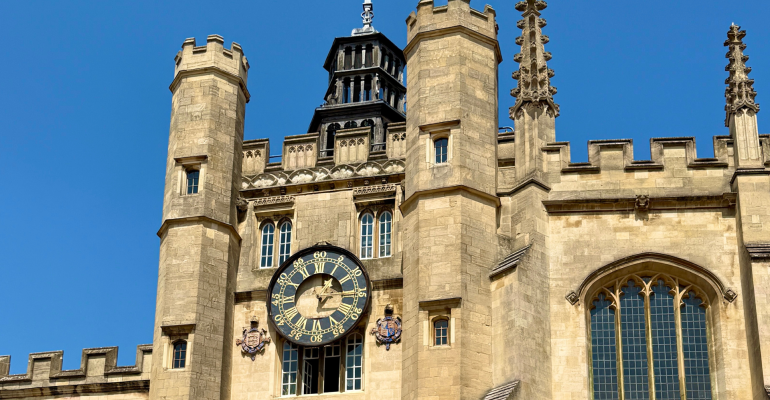
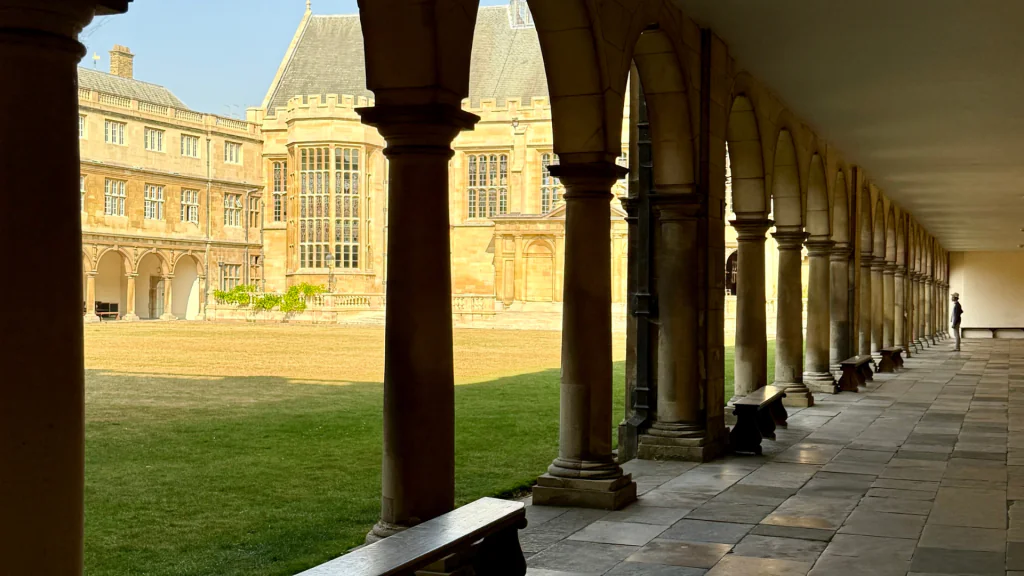
Gina During my visit to Cambridge, I walked the cloisters at Trinity College and learned how Newton used this unlikely space as a laboratory. The long stone passage carried sound to the far wall and sent it back as a clear echo. Tradition says Newton stamped his foot and listened closely for the returning sound.
The challenge was timing. Portable clocks of the era weren’t precise enough to measure fractions of a second. Newton solved this by using a pendulum. He adjusted its length until one swing matched the interval between his stamp and the echo. Since he had already worked out the mathematical relationship between pendulum length and period, he could turn that brief delay into a usable measurement.
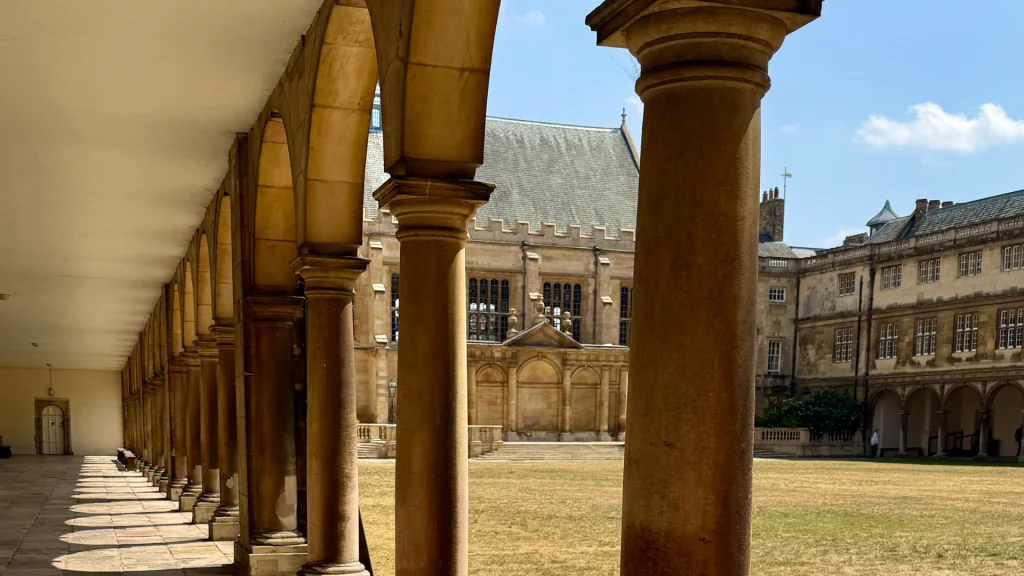
Knowing the cloister’s length about 64 metres, he calculated the sound’s journey of roughly 128 metres. His result, around 298 metres per second, was lower than today’s accepted figure of 343, but the experiment was extraordinary. With a corridor, an echo, and a pendulum, Newton brought mathematics and observation together to investigate the invisible movement of sound.
What struck me most was not the precision of the number, but the ingenuity of the method. Newton didn’t wait for perfect instruments, he created a way forward with what he had.
It made me reflect:
- Where in your life are you waiting for ideal conditions before you begin?
- What breakthroughs might come if you experimented with the tools already in your hands?
- How could curiosity and persistence replace perfection as your guide?
Reveal greatness,
gina 🙂

